
The Human Side of Project Leadership #004
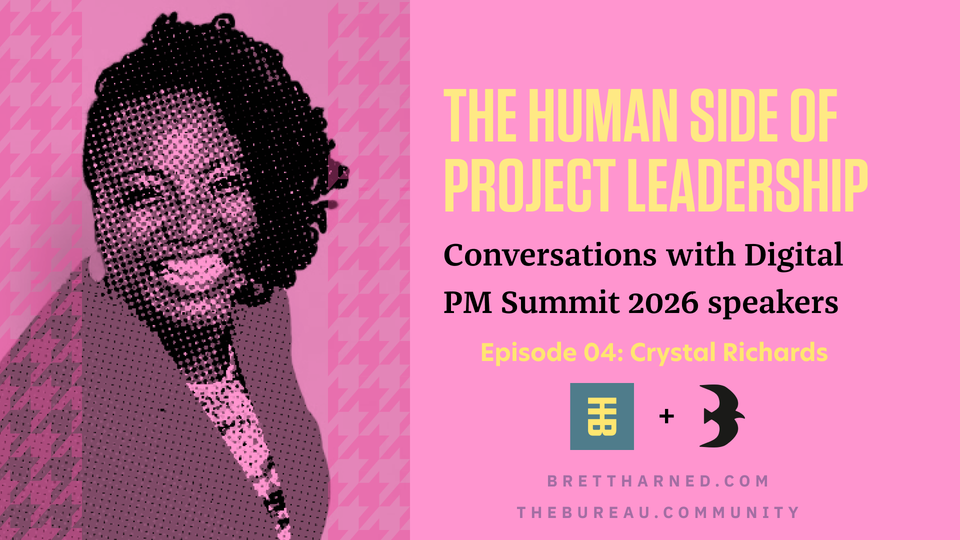
What If the Best Thing You Can Do Is Stop Working?
Featuring Crystal Richards, Digital PM Summit 2026 Speaker
Project managers are very good at being available. We answer the message. We jump into the meeting. We solve the problem. We make ourselves useful. And somewhere along the way, being constantly available can start to feel like part of the job.
That's one of the ideas at the center of my conversation with Crystal Richards, founder of MindSpark, author of PMP Exam Prep For Dummies, and a speaker at this year's Digital PM Summit.
Crystal's session, "Recess for Grown Ups: Why Your Best Project Thinking Happens When You Stop Working," makes the case that stepping away from work isn't just about avoiding burnout. It's necessary for thinking, connecting, and ultimately doing better work.
Crystal has a pretty clear signal for when she needs a break: she stops caring. That made perfect sense to me. When another stakeholder request, risk, change, or team problem hits your desk and your reaction is basically whatever, just get it done, you might not suddenly be bad at your job. You might just be exhausted.
One thing I like about Crystal's idea of "recess" is that it isn't necessarily about doing nothing. For her, it can mean drawing, being creative, talking with people outside of her usual circles, or simply using a different part of her brain. It can also mean actually going on vacation.
We discovered that neither of us wants to project-manage our time off. Crystal lets her husband plan their trips. I barely want to look at a restaurant menu. After spending all day organizing people, decisions, schedules, risks, and everything else, sometimes the last thing you need is another plan.
But this conversation isn't only about individual boundaries. Leaders have a responsibility here too. Crystal put it simply: demonstrate the behavior you want to see.
You can't tell people to disconnect and then email them at 9:00 p.m. You can't tell a team to avoid burnout while continually adding work they don't have the capacity to take on. Sometimes good leadership means saying "yes, if": yes, we can do that if we extend the timeline, add resources, or agree on what comes off the list.
And then, of course, we talked about AI.
We're supposed to be using AI to save time. But are we actually creating more space to think? Or are we just filling that time with more work?
Crystal thinks it's the latter, and I tend to agree. If AI helps us produce twice as much, we still have to review, question, and apply human judgment to twice as much. Just because we can do more doesn't mean we should.
That's why I liked Crystal's answer when I asked what she hopes people remember after her Summit session: Make yourself your own project.
We spend so much of our careers thinking about what everyone else needs to be successful. Maybe we need to apply some of that same care and attention to ourselves.
If you'd like to hear the full conversation, watch it above. And if you'll be joining us in Asheville this October, don't miss Crystal's session, "Recess for Grown Ups: Why Your Best Project Thinking Happens When You Stop Working."
Maybe the most productive thing you do that week will be going to recess.
T L ; D R - Project managers often mistake constant availability for value. Crystal Richards makes the case that stepping away creates the space we need to think, connect, recover, and ultimately lead better.

Member discussion