

The receipts.
I came across an interesting article by Kristin Carideo this week called Project Management and Agency Context in the Age of AI. In it, she argues that a project manager's real job is solving what she calls "the Problem of Context"—capturing information, preserving knowledge, and making sure important details aren't lost as work moves through an agency.
I agree with much of what she wrote. Context matters. Good documentation matters. Every project benefits when decisions are captured and knowledge is shared. Reading her article also made me realize that I think about the role a little differently. I don't think those things are the job. I think they support the job, and that's an important distinction.
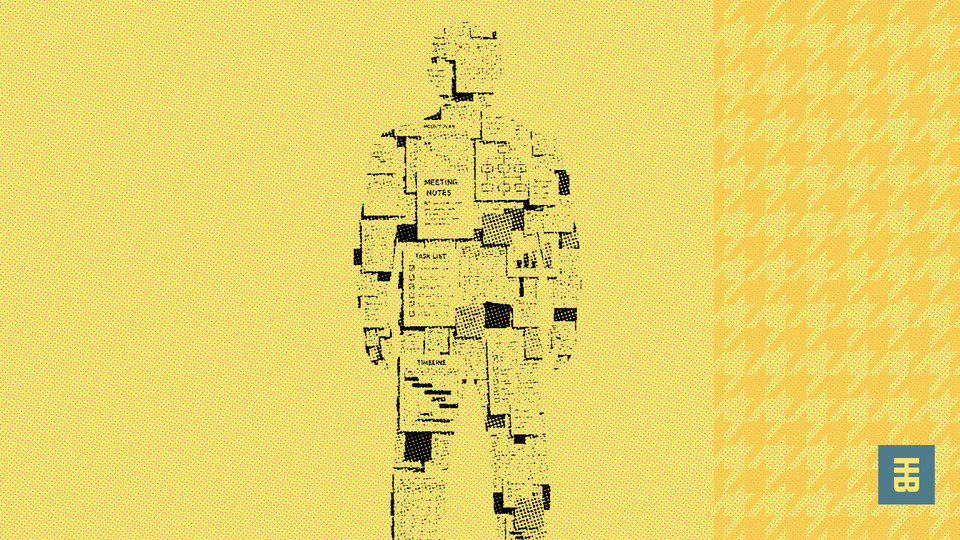
For years, we've described project management by pointing to the things project managers produce: project plans, timelines, meeting notes, status reports, dashboards, RAID logs, etc. Those deliverables are visible, so they've become the easiest way to explain what project managers do.
The problem is that we've confused the evidence of project management with project management itself.
What clients are really buying
Kristin points out that clients don't hire agencies because they want project managers. I think she's right. Clients hire agencies because they want great work delivered successfully.
The problem is that we've spent years trying to prove the value of project management by showing clients the things we produce. We point to project plans, meeting notes, status reports, dashboards, and carefully maintained timelines because they're tangible. They're easy to point to and say, "This is what project management looks like."
But those things aren't the reason projects succeed. They're the byproduct of good project management, not the purpose of it.
After years of working with clients as a project manager, I've become convinced that what they're really buying is confidence. Confidence that the team will produce an amazing product, of course. But also confidence that someone is paying attention to the timeline and budget, that risks won't become surprises, that decisions won't fall through the cracks, and that the team isn't quietly drifting in different directions. The documentation supports that confidence, but it doesn't create it. It comes from a project manager who's paying attention, asking the right questions, noticing what's changing, and having the courage to surface difficult conversations before they become bigger problems.
The work happens in the conversation
Think about the last project that started to go sideways. Chances are it wasn't because someone forgot to send the meeting notes. It was because two stakeholders thought they had agreed on something when they hadn't. A difficult conversation was postponed. An assumption went unchallenged. A risk was recognized but never discussed. None of those problems were caused by poor documentation, and none of them would have been solved by a prettier status report. They would have been avoided if someone had recognized the misunderstanding before it became a problem.
I've been in way too many meetings where everyone nodded in agreement, only to discover that four people left with a completely different understanding of what had just been decided. The meeting notes accurately reflected the conversation, but they didn't solve the problem. The problem was that everyone heard something different.
That's why one of the principles I've come back to throughout my career is that a project manager's job is to help everyone hear the same thing. The biggest problems I've seen on projects usually weren't caused by people making bad decisions. They were caused by people making different decisions without realizing it, or believing they had agreed on something when they hadn't. Helping a team recognize those moments and making sure everyone leaves hearing the same thing is where project managers create real value.
Reading Kristin's article made me realize that I define context a little differently. I don't think context creates value on its own. Its value comes from helping people understand one another, make better decisions, and solve the right problems.
AI didn't change the job
That's why I'm not especially interested in debating which project management tasks AI will replace next. If AI can summarize meetings, organize information, draft status reports, and maintain documentation, fantastic. Those tasks have always been necessary, but they were never the reason project managers were valuable in the first place.
AI can make the administrative side of the job dramatically faster. What it can't do is pay attention. It can't notice that the client sounded hesitant when they said, "That's fine." It can't recognize that two stakeholders left the same meeting with different assumptions. It can't decide when a difficult conversation needs to happen, or earn the trust that makes those conversations productive.
In many ways, I think AI is forcing us to ask a more interesting question. Have we been defining project management by the things we produce instead of the outcomes we create?
The receipts
I'll say it again: Project plans matter. Meeting notes matter. Status reports matter. They help preserve context, create accountability, and keep everyone informed. But if we've come to define project management by those things, we've mistaken the evidence for the work itself.
Reading Kristin's article reminded me that we've spent years talking about context. Maybe it's time we spent a little more time talking about what happens between the documents. Because the documents aren't the work; they're simply the receipts.
T L ; D R: Project plans, meeting notes, and dashboards aren't the work of project management, they're the evidence that the work happened. AI can generate the receipts, but great project managers still create the trust, alignment, and communication that make projects successful.
Member discussion