

Why we keep creating accidental project managers
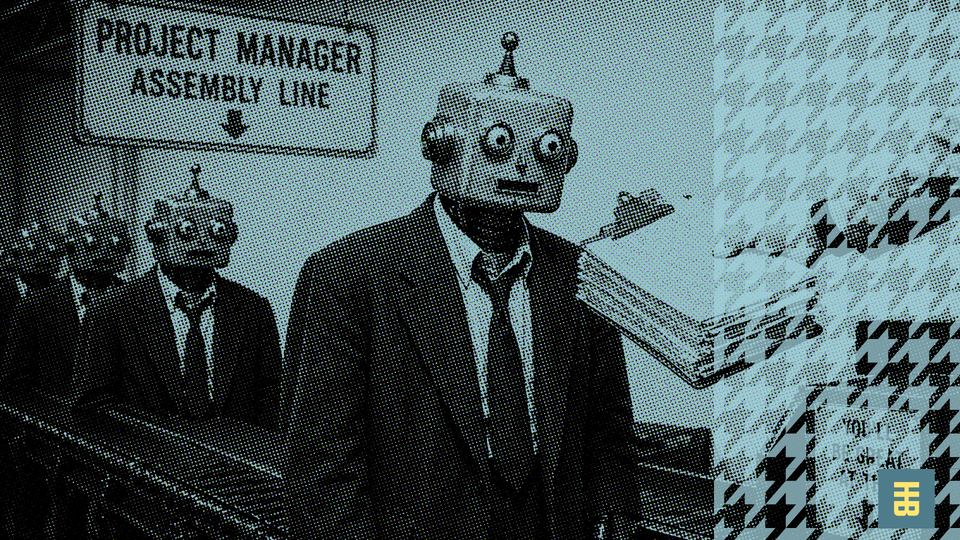
Most project managers did not choose the role. The role chose them.They became accidental project managers because the work needed structure.
That story gets told so often that it almost sounds like a personality quirk. Someone was organized. Someone was good with people. Someone could see the whole picture. Before long, they were the one holding timelines, translating tension between teams, and making sure the work did not quietly drift off course.
I call that accidental project management.
The more time I spend working with PMs across industries, the more I believe that “accidental” is not a personal story. It is a structural one. We don't have accidental project managers because people stumbled into the work. We have accidental project managers because we never built clear, accessible pathways into one of the most critical leadership roles inside modern organizations.
How we prepare project managers
Project management is a strategic function. It sits at the intersection of vision and execution. It translates ambition into coordinated action. It protects time, money, trust, and momentum. When delivery leadership is strong, organizations move with purpose. When it's weak, even the best strategies struggle to land.
And yet, the way we prepare people for this role tells a different story.
There are project management degrees in the United States. There are certifications. There are MBA tracks. Entire ecosystems exist around methodology and frameworks. Much of that education is rooted in business schools, shaped by process, and designed for formal PM roles within structured environments.
That kind of education absolutely has value. It gives language, structure, and shared standards to the profession, but it's not how most people first encounter project management.
Think about school for a second.
You get assigned to a group project. Someone inevitably takes the lead. They organize the document. They set deadlines. They follow up when things stall. They make sure the presentation holds together.
That person is doing project management.
The best teachers name it, but no on teaches it. To be fair, most teachers I know would benefit from PM training. Hell, most professionals would! But the fact is, no one says, “This is a discipline you can study and build.” We treat it as a personality trait rather than a leadership skill.
As kids and young adults, we learn subjects. We learn how to specialize. We learn how to perform. We complete projects, but we are rarely taught how to run them. So when someone later becomes the person coordinating people, balancing trade-offs, and carrying responsibility without authority, it feels accidental.
Because it was never formally introduced as a path.
If your projects rely on “whoever steps up” instead of a clear delivery structure, you’re not alone—but it’s a sign your organization has outgrown its current model. I can help you define roles, reduce friction, and build a system your team doesn’t have to fight.
Accidental is a signal, not a fluke
So organizations compensate in real time.
When there is no formal project management function, the person who naturally coordinates across teams begins to take on more responsibility. The one who spots risk early becomes the informal stabilizer. The one who can hold competing priorities in their head becomes the translator. These patterns repeat often enough that they stop feeling surprising.
That is not randomness. It is signal.
People are pulled into project management because they demonstrate systems thinking, emotional intelligence, and pattern recognition. They feel the tension in a timeline before anyone else does. They sense when alignment is performative instead of real. They care about whether work actually lands.
Sometimes that signal turns into a title. A recruiter reaches out. A manager says, “You’d be great at this.” That is how it happened for me. I was recruited into a PM role based on skills I had already demonstrated. At the time, I did not even have a clear definition of what project management was.
But I can tell you, the moment the role becomes official is often when doubt shows up. At least it did for me.
Once you're "The PM," expectations become sharper. The work feels more visible. The lack of formal training becomes more obvious. Without a clear pathway, without orientation, and without a shared definition of the role, those same people begin to question themselves. They wonder whether they are doing it right. They experience imposter syndrome. They carry invisible labor. They feel responsible for outcomes without always having the authority to shape them.
Over time, many realize that this is not just a collection of tasks. It is a discipline. It is a leadership function. It is a career path with depth and range.
The instinct was never the problem. The absence of a pathway was.
Where education and reality diverge
Classrooms can teach process, terminology, and frameworks, but most PMs learn leadership in real time.
They learn it when the timeline is already tight. When a client changes direction. When a team member burns out. When the strategy sounds great but the execution does not quite line up.
That is where judgment forms and confidence builds.
T L ; D R - Most “accidental” project managers" are not behind. They are leaders who were pulled into delivery without a clear pathway. We teach specialization early and coordination late, which leaves talented people figuring out project leadership in motion. It is time to treat delivery as a strategic discipline and build real pathways into it.
Member discussion